When the Scan Doesn’t Explain the Pain: Why Function, Load and Movement Still Matter
Jul 06, 2026One of the most frustrating things a person can hear is:
“Your scan looks fine.”
Or perhaps:
“There’s nothing significant showing.”
For someone experiencing persistent pain, reduced confidence, difficulty running, walking, exercising or simply getting through daily life, that can feel incredibly dismissive.
But there is another side to this conversation.
A scan that does not clearly explain someone’s symptoms does not mean there is nothing to assess.
And equally, something appearing on a scan does not automatically mean it is the sole cause of pain.
This is where the conversation becomes far more interesting for both patients and health professionals.
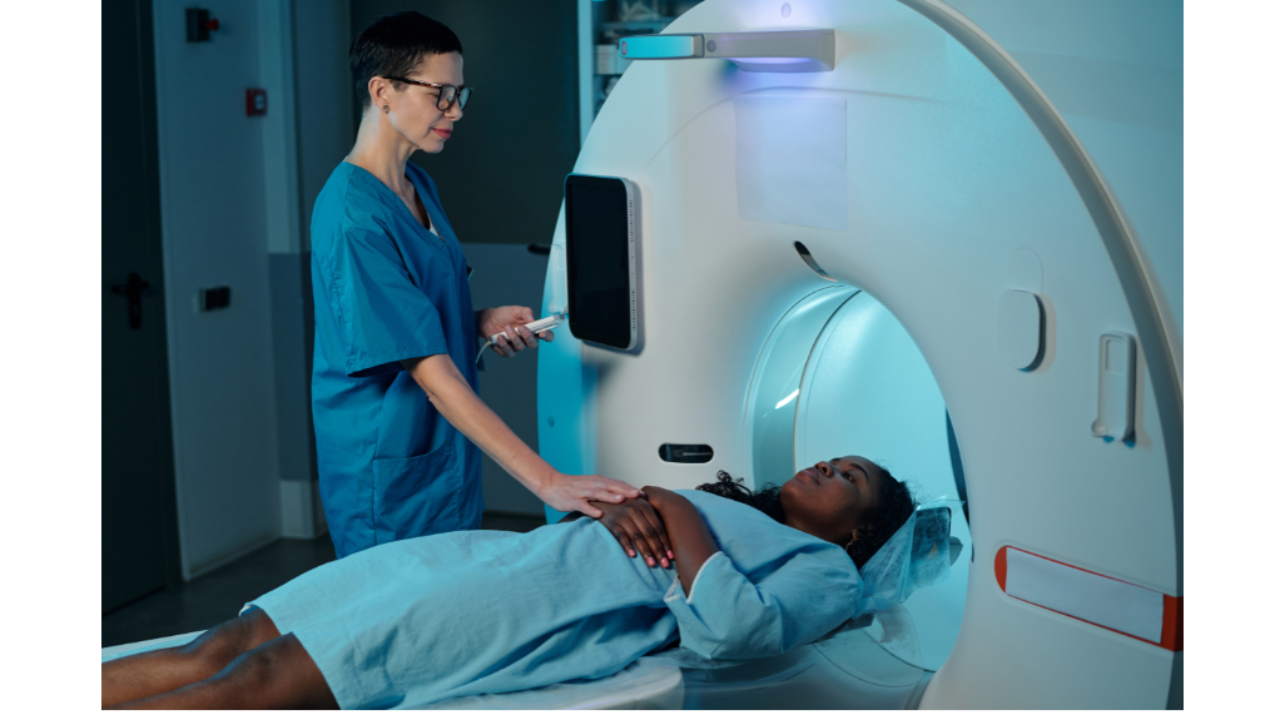
A scan shows structure. It does not show the whole person.
Imaging can be extremely valuable.
X-rays, ultrasound, MRI and other investigations can help identify fractures, significant tissue injuries, pathology, structural changes and conditions that require further investigation or medical management.
But a scan is still a snapshot.
It does not necessarily show:
-
how someone transfers load through the foot
-
how the big toe contributes during propulsion
-
whether the rearfoot, midfoot and forefoot can adapt appropriately
-
how the foot interacts with the surface beneath it
-
how the ankle manages progression
-
how the knee responds to load
-
what the pelvis and trunk are doing
-
whether movement changes under speed or fatigue
-
how someone runs
-
whether footwear is helping or hindering the task
-
whether a person has sufficient capacity for the demands being placed on them
-
how the nervous system is interpreting and responding to threat, load and movement
These things matter.
Because people do not live inside an MRI scanner.
They walk. Run. Twist. Lift. Work. Play sport. Climb stairs. Stand for hours. Wear shoes. Carry children. Change direction. Fatigue.
Pain exists within that much larger context.
Structural findings and symptoms do not always match neatly
One of the challenges in musculoskeletal healthcare is that structure and symptoms are not always perfectly aligned.
Some people have imaging findings and very little pain.
Others have significant pain with relatively unremarkable imaging.
Some have pain in a location that initially appears obvious, but the local tissue may only be one part of a much broader mechanical or neuromuscular picture.
This does not mean structure is irrelevant.
It means structure is one part of the clinical puzzle.
The question should not simply be:
“What does the scan show?”
It should also be:
“What is this person being asked to do, and how are they currently doing it?”
Pain during movement requires us to assess movement
This sounds obvious.
Yet it is still common for people with walking pain to never be properly observed walking.
Runners may be assessed without being observed running.
People with pain during a specific sporting task may receive a generic exercise program without that task being explored.
A person may be told they are “weak” without asking whether strength is actually the primary limitation.
This is where assessment needs to become more individual.
Depending on the person and their presentation, I may want to explore:
-
walking gait
-
running gait
-
single-leg control
-
foot progression
-
joint mobility
-
tissue tolerance
-
balance and sensory input
-
trunk strategy
-
breathing and pressure management
-
developmental movement patterns
-
footwear
-
insoles or orthoses
-
previous injury
-
training history
-
recent changes in load
-
recovery capacity
-
the specific task that aggravates symptoms
Not every person requires every assessment.
That is precisely the point.
Assessment should be driven by the individual in front of us.
The painful area is important, but it may not be the whole story...
If someone has heel pain, of course I assess the heel.
If they have Achilles pain, I assess the Achilles region.
If they have forefoot pain, I assess the forefoot.
Local tissue matters.
But I also want to understand the environment in which that tissue is functioning.
Why might one structure repeatedly receive more load than it currently tolerates?
Is movement available but poorly controlled?
Is movement restricted?
Is the person avoiding a region?
Are they using a strategy that increases demand elsewhere?
Has footwear changed the sensory or mechanical environment?
Has training load increased?
Has a previous injury changed confidence or movement behaviour?
Is the foot adapting to the ground , or is it struggling to manage the task?
These questions do not imply that every pain problem is caused by a “compensation” somewhere else.
Human movement is more complex than that.
But they do remind us that treating only the site of symptoms may sometimes leave important information unexplored.
Control before strength?
Strength matters enormously.
But strength is not the only quality required for movement.
A person may produce force very well in an isolated exercise and still struggle to organise that force during walking, running or single-leg tasks.
This is one reason I often discuss stabilisation rather than simply “strengthening”.
Stabilisation is not about making the body rigid.
It is about creating sufficient control for movement to occur efficiently around a task.
The foot needs to be both adaptable and capable of becoming sufficiently stable.
The trunk needs to contribute to movement without unnecessary rigidity.
The nervous system needs useful sensory information.
The body needs options.
Sometimes the missing piece is strength.
Sometimes it is mobility.
Sometimes it is timing.
Sometimes it is sensory input.
Sometimes it is load management.
Sometimes it is footwear.
Sometimes it is confidence.
Often, it is a combination.
Why generic exercise programs can miss the mark
Many people with lower-limb pain have already tried exercises.
Calf raises.
Calf stretches.
Resistance-band inversion and eversion.
Short-foot exercises.
Balance exercises.
These exercises are not inherently “bad”.
The problem is assuming that the same small group of exercises addresses every presentation.
A calf raise may be appropriate.
But why is it being prescribed?
What adaptation are we trying to create?
Does the person have the movement options required to perform it well?
Does it relate to the task they are trying to return to?
Can they integrate that capacity into walking, running or sport?
An exercise is not a rehabilitation strategy simply because it is commonly prescribed.
Footwear is part of the movement environment
Shoes can change the interaction between the foot and the ground.
Toe-box shape, sole stiffness, cushioning, heel elevation, rocker geometry, flares, cut-outs, torsional characteristics and ground feel may all influence how a person experiences and performs a task.
Again, there is no universally perfect shoe.
A highly cushioned shoe may be useful for one person and unhelpful for another.
A minimalist shoe may be appropriate in one context and poorly tolerated in another.
A rocker sole may reduce demand in one region while changing demand elsewhere.
An orthosis may be helpful when used with a clear purpose, or create issues locally and further up the chain if not fully understood function of the device.
Another person may be seeking a pathway away from long-term orthotic dependence and require a gradual, individualised approach.
The question is not:
“Is this shoe good or bad?”
The better question is:
“What is this shoe doing for this person, during this task, at this point in time?”
Treatment should support the goal , not replace the assessment
Depending on the presentation, management may involve a combination of approaches.
This could include:
-
education
-
load modification
-
progressive exercise
-
foot and ankle stabilisation strategies
-
gait or running modification
-
footwear advice
-
insole modification
-
orthotic review
-
manual therapy
-
joint mobilisation
-
soft-tissue approaches
-
taping
-
dry needling
-
laser therapy
-
other clinically appropriate interventions
But no tool should become the entire philosophy.
The goal is not to collect treatments.
The goal is to understand the presentation well enough to make better decisions.
So what do we do when the scan does not explain the pain?
We keep assessing.
We listen carefully to the history.
We examine the local area.
We consider serious pathology and referral where appropriate.
We look at the task.
We look at load.
We look at movement.
We consider capacity.
We assess the environment , including footwear and training demands.
And most importantly, we avoid assuming that “nothing significant on the scan” means there is nothing meaningful to work with.
For patients, this can be an important shift.
For health professionals, it is a reminder that clinical reasoning cannot be replaced by imaging alone.
A scan may be part of the story.
But the person in front of us is the whole story.
Tracy Cooke
Injury & Rehabilitation Podiatrist
From The Feet Up – Sports & Podiatry Clinic
The Stabilisation Academy
This article is general educational information only and does not replace individual assessment, diagnosis or medical advice.