
From Big Toe to Hamstring - A systems-based look at why Australian Football League hamstring injuries persist, and what to do about it
Apr 08, 2026Why hamstrings remain a top AFL injury
Hamstring strain injuries are not a “new” problem in elite Australian football and the numbers show they’re still a major burden. In the AFL’s 2023 season injury reporting, hamstring strains were the highest-incidence injury category (4.71 hamstring strains per club per season) and accounted for an average of 14.34 missed matches per club.
When you zoom out across multiple seasons, the scale becomes even clearer. In an analysis of 773 elite male Australian football hamstring injuries across seven seasons, teams could expect roughly seven hamstring injuries per club per season, and about one in four were recurrent. Recurrent injuries also tended to “cluster” early: over half occurred within two months of the index injury, and the biceps femoris was involved in the vast majority of recurrences.
Just as importantly, the mechanism data points us toward a “movement system” problem, not a single-muscle problem. In that same AFL dataset, running-related mechanisms made up 57.5% of reported hamstring injuries, with acceleration, high-intensity running, and sprinting featuring prominently. This aligns with wider hamstring science: hamstrings are heavily loaded during fast running, particularly when they must coordinate high eccentric braking with rapid transition into propulsion.
So the practical question becomes: what is happening upstream and downstream of the hamstrings at the foot, the trunk, and the footwear interface that changes timing, force transfer, and load distribution?
The big toe joint: small hinge, big consequence
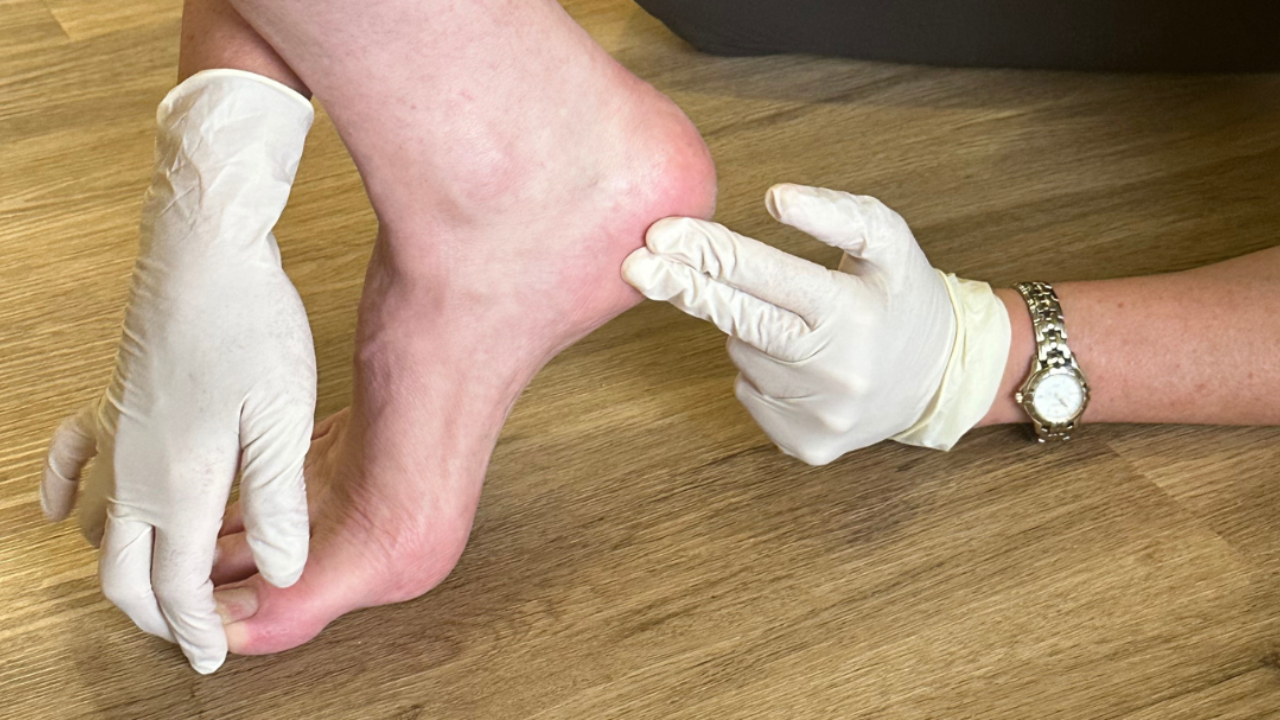
When clinicians talk about “foot function,” the conversation often drifts toward arch height or “pronation vs supination.” For hamstrings, a more useful starting point is frequently the first metatarsophalangeal joint (1st MTPJ) your “big toe joint” , because it’s central to propulsion mechanics.
Human gait efficiency depends on the ability of the toes (especially the hallux) to dorsiflex at the MTP joints during late stance and push-off. Modern biomechanics literature also highlights that toe dorsiflexion at the MTP joints and metatarsal head splaying both influence how the foot stiffens and transmits force during propulsion.
Why does this matter for hamstrings? Because when forefoot propulsion and toe off - ("rocker" in American terms - I will use the term "rocker" during the rest of the blog for ease of term) and big toe joint don’t move well, the body often “solves” the problem by shifting work elsewhere.
Two experimental lines of evidence are especially relevant:
First, when healthy adults had unilateral metatarsophalangeal joints immobilized (restricting forefoot rocker), researchers observed marked reductions in ankle plantarflexion and ankle push-off work, and a compensatory increase in positive work at the hip joints across the gait cycle. In plain language: when the toes can’t do their job at push-off, the system tends to pull harder from higher up the chain. Also anecdotally in a clinical setting , if all the toes are allowed to splay (align in front of the corresponding MPJ's) - triple flexion is increased - Triple flexion being simultaneous flexing of the ankle, knee and hip .
Second, when first MTPJ motion was constrained, researchers found increases in joint loading/energy demands across the lower limb. In one study, restricting first MTPJ movement increased ankle negative work substantially (reported as a 63.6% increase in negative ankle work in one comparison), alongside increased knee and hip joint torque demands again suggesting “up-the-chain compensation” when forefoot function is limited.
These studies are walking studies - not maximal sprinting, so we should be careful not to overclaim. But the direction of travel is clinically meaningful: if you reduce effective propulsion at the foot, the system often increases proximal demand to keep the body moving forward. In a sport where most hamstring strains are running-related, that should get our attention.
A final (important) nuance: not every study finds clean relationships between clinical big toe range and hip/knee kinematics. For example, in people with first MTPJ osteoarthritis, passive non-weightbearing first MTPJ dorsiflexion correlated with first MTPJ and ankle gait measures, but not necessarily hip/knee sagittal kinematics. That’s a reminder that “big toe → hamstring” is not a single straight line; it likely acts through timing, stiffness, and force-transfer strategies that change most under speed, fatigue, and direction change, exactly the conditions that dominate AFL match play.

What football boots change: traction, stiffness, and foot splay
The recent public discussion about football boots often focuses on traction, and yes traction does matter. Too little traction can cause slipping and compromised performance, while too much traction can increase the likelihood of “foot fixation,” where the foot sticks and force is transmitted into joints and soft tissues above.
But for hamstrings, traction is only one part of the footwear story. Two other boot features deserve equal attention:
Bending stiffness and first MTPJ motion
Football boots are typically stiffer than barefoot function, especially through the outsole/forefoot. Football footwear research has long treated bending stiffness as a design variable that influences performance and joint mechanics. In a foundational football boot bending stiffness paper, researchers emphasized that the outsole is substantially stiffer than the upper, and that boot construction meaningfully affects how the boot flexes during movement.
More broadly, changes in forefoot bending stiffness can alter MTP joint mechanics. For example, in football-related footwear research, increasing forefoot bending stiffness has been associated with reduced peak MTP bending angles and performance-related effects, depending on context and athlete population.
If a boot restricts first MTPJ dorsiflexion under load, the system may reduce natural forefoot rocker contribution - pushing the athlete toward proximal compensation strategies similar to those seen when MPJs are immobilized.
Foot splay and “natural adaptation”
Modern gait research highlights that transverse splaying of the metatarsal heads can be part of how the foot stiffens and manages load during propulsion. Narrow toe boxes and rigid forefoot structures can reduce this adaptability, especially under high load and cutting conditions (when the foot needs to deform, stabilize, and then re-stiffen rapidly).
This matters clinically because you can “strengthen the hamstrings” and still fail to fix the real issue: the athlete may be strong, but the system may be late, mis-sequenced, or over-reliant on posterior chain compensation when the foot can’t express its normal mechanics. This applies also to calf issues as well.
Stud configuration and the traction “safe zone”
Stud design and outsole configuration measurably influence traction across different movements and surfaces. In one recent traction study, longer and asymmetric studs produced significantly higher traction coefficients compared with recommended configurations, on 75% of loading scenarios on natural grass and 50% on artificial grass.
Other football engineering research argues for a traction “safe zone,” acknowledging the trade-off between performance needs and injury risk. A methodological framework paper emphasized that both insufficient traction (slipping) and excessive traction (foot fixation) can be problematic, and proposed approaches to define safe traction ranges under realistic loads and football-specific movements.
For AFL, where surfaces, player size/speed, and running demands have evolved - this raises a blunt but practical point: if boots limit forefoot function and increase fixation during braking/cutting, the hamstrings may be forced into higher-load roles they weren’t “scheduled” to do.
A DNS perspective on footwear
This is the moment to layer in a Dynamic Neuromuscular Stabilisation (DNS) lens, not as a buzzword, but as a way to think about why footwear can change injury risk without any change in “strength scores.”
DNS frameworks emphasize that effective athletic movement is not achieved by raw strength alone, but by precise coordination, co-activation, and intra-abdominal pressure regulation within an integrated stabilizing system. In that context, footwear becomes more than equipment, it becomes an input that can meaningfully alter:
- sensory feedback from the ground,
- joint centration strategies through the foot/ankle, and
- the sequencing of propulsion and trunk control.
If a boot restricts first MTPJ motion and reduces the foot’s ability to adapt and re-stiffen, the athlete may still “produce force,” but the system may change how and when it produces it, often shifting demand toward proximal tissues like the hamstrings during high-speed gait transitions.
Sagittal trunk stabilization: the timing problem
If the foot is one end of the problem, the trunk is often the other.
The best hamstring rehab and prevention research repeatedly points to proximal control and trunk/pelvic stability as meaningful factors in outcomes, including recurrence.
One of the clearest examples is a randomized comparison of two hamstring rehab approaches: a program emphasizing progressive agility and trunk stabilization versus stretching/strengthening. The trunk/agility group had dramatically lower recurrences, reported as 0% recurrence in the first two weeks after return to sport versus 54.5% in the stretching/strengthening group, and 7.7% vs 70% recurrence at one year.
Prospective sprint EMG research supports the same direction. In male footballers, higher gluteal and trunk muscle activity during sprint phases was associated with reduced hamstring injury risk. Notably, a 10% increase in normalized gluteus maximus activity (front swing) and trunk muscle activity (backswing) were associated with meaningful reductions in injury risk in follow-up analyses.
And when “core-focused” work is embedded into broader injury prevention programs, hamstring injuries can drop. A meta-analysis of injury prevention programs that included core muscle strengthening exercises in soccer reported a pooled 47% reduction in hamstring injury rate (risk ratio 0.53).
From a DNS viewpoint, this is less about having a strong “six pack” and more about whether the athlete can maintain sagittal plane trunk control (core co-ordination in the optimal sequence during movement) and coordinated centration under load, speed, and fatigue, so the hamstrings aren’t repeatedly recruited as the emergency stabilizer.
How AFL can address this: a systems-level plan
AFL clubs already do many evidence-based hamstring strategies (eccentric loading, sprint exposure, load monitoring). The opportunity here is to add a missing layer: foot function and footwear, integrated with trunk stabilization and running mechanics.
A workable structure looks like this:
Screening that respects function (not just “range”)
Start measuring what actually changes propulsion and sequencing:
Assess first MTPJ function under load and during movement, not only passive range. Walking studies show that immobilizing MPJs reduces ankle push-off work and increases hip work, exactly the kind of compensation pattern you want to detect early.
Build a screening snapshot that includes: loaded hallux dorsiflexion capacity, forefoot rocker expression, and whether the athlete can access a stable push-off strategy without early heel rise or proximal “pulling.” (The aim is not perfect feet; it’s efficient sequencing and timing.)
Training that targets timing and transfer
Keep strength, but stop treating it as the whole solution.
Hamstring injuries are predominantly running-related in AFL injury surveillance, with acceleration and high-intensity running prominent. So prevention must include:
- ongoing exposure to high-speed running and acceleration mechanics (appropriately dosed),
- trunk/pelvic control integrated into sprinting and agility (not isolated “core circuits”),
- and foot-driven propulsion drills that restore hallux use, toe splay and forefoot rocker contribution.
If a club already runs Nordics and eccentrics, the shift is not “remove them,” but embed them into a coordination model where the athlete earns speed and cutting by demonstrating sequencing: trunk control → foot loading → big toe propulsion → swing re-organization.
Footwear as a modifiable risk variable (not an afterthought)
Boot choice should be treated like any other load management variable because stud configuration and outsole choices measurably change traction, and traction extremes are linked to both performance outcomes and injury mechanisms (slip vs fixation).
At minimum, clubs can:
Create boot-surface pairing rules that consider season phase, player role, and injury history. Recent traction research shows that stud geometry choices can shift traction coefficients substantially across scenarios.
Pilot simple “position and profile” considerations: the running demands of high-mileage midfielders differ from key-position players, yet boot design is often one-size-fits-all.
Return-to-play progression that includes footwear reality
Many players return to high-speed running in a controlled setting, then re-enter match conditions where traction, cutting angles, and fatigue create different loads.
Given that recurrent hamstring injuries in AFL occur frequently and early after return (with clustering in the first months), return-to-play should include sport-boot-surface exposures and trunk/foot timing checks, not just top speed.
A note for the general public
If you’re not an AFL player, the “big idea” still applies: when the big toe joint and foot can’t contribute to propulsion, your body often finds another way to move, and the hamstrings frequently pay the price. The solution is rarely just stretching, or just strengthening. Evidence from rehab trials shows trunk stabilization and agility-based programs can reduce recurrence far more than hamstring stretching/strengthening alone.
About the Author
Tracy Cooke is an Injury & Rehabilitation Podiatrist with over 30 years of clinical experience treating complex foot, ankle and lower limb injuries with an interest in Injury Prevention.
Based in Perth, Western Australia, Tracy specialises in helping people overcome persistent pain, recurrent injuries and movement problems by addressing the underlying causes of dysfunction rather than simply treating symptoms.
Her clinical approach focuses on global movement assessment, Dynamic Neuromuscular Stabilization (DNS), motor control and movement-based rehabilitation, recognising that the foot plays a critical role in stabilising the entire body.
Tracy works with athletes, active individuals and people struggling with long-standing foot and lower limb pain, including conditions such as Achilles injuries, plantar heel pain, recurrent ankle sprains and sports-related injuries, that occur due to poor foot mechanics that contribute to injuries higher up the chain.
She is also the founder of The Stabilisation Academy, where she teaches health professionals internationally about stabilisation, motor control and modern rehabilitation strategies.
Tracy consults privately at From The Feet Up Sports & Podiatry Clinic in Perth, helping patients restore efficient movement, reduce pain and prevent injuries from returning.
If you’re in Perth and struggling with ongoing foot, ankle or lower limb pain, you can book an appointment here: [Booking Link]
Health professionals interested in learning more about stabilisation and movement-based rehabilitation can access Tracy’s free masterclass on Understanding and Applying Stabilisation Principles here:
[Masterclass Link]
References
Al Attar, W.S.A. et al. (2023) ‘Effectiveness of injury prevention programs with core muscle strengthening exercises: a systematic review and meta-analysis’, Sports Health.
Australian Football League (2024) ‘AFL and AFLW injury reports’ (2023 season data). Available at: AFL.com.au (Accessed: 8 April 2026).
Breed, R., Opar, D., Maniar, N. and Pizzari, T. (2024) ‘Epidemiology of hamstring strain injuries in elite male Australian football players: an analysis of 773 injuries over 7 seasons’, JOSPT Open.
Forrester, S.E. and Fleming, P. (2019) ‘Traction forces generated during studded boot-surface interactions on third-generation artificial turf: a novel mechanistic perspective’, Engineering Reports, 1(3), e12066. doi:10.1002/eng2.12066.
Frank, C., Kobesova, A. and Kolář, P. (2013) ‘Dynamic neuromuscular stabilization & sports rehabilitation’, International Journal of Sports Physical Therapy, 8(1), pp. 62–73.
Fraser, S., Harland, A., Smith, P. and Lucas, T. (2014) ‘A study of football footwear bending stiffness’, Procedia Engineering, 72, pp. 315–320. doi:10.1016/j.proeng.2014.06.047.
Keshvari, B., Lehoang, L. and Senner, V. (2023) ‘Investigating the effect of outsole configurations on rotational and translational traction using a mechanical prosthetic foot’, Sports Engineering, 26, 43.
Kobesova, A. et al. (2020) ‘Functional postural-stabilization tests according to Dynamic Neuromuscular Stabilization approach: proposal of novel examination protocol’, Journal of Bodywork & Movement Therapies, 24, pp. 84–95.
Loud, D. et al. (2024) ‘Effect of soccer boot outsole configuration on translational traction across both natural and artificial playing surfaces’, Orthopaedic Journal of Sports Medicine.
Sichting, F. et al. (2020) ‘Effect of the upward curvature of toe springs on walking biomechanics in humans’, Scientific Reports, 10, 15318.
Schuermans, J. et al. (2017) ‘Proximal neuromuscular control protects against hamstring injuries in male soccer players: a prospective study with electromyography time-series analysis during maximal sprinting’, The American Journal of Sports Medicine.
Sherry, M.A. and Best, T.M. (2004) ‘A comparison of 2 rehabilitation programs in the treatment of acute hamstring strains’, Journal of Orthopaedic & Sports Physical Therapy, 34(3), pp. 116–125. doi:10.2519/jospt.2004.34.3.116.
Takahashi, T. et al. (2021) ‘Effects of restriction of forefoot rocker functions by immobilisation of metatarsophalangeal joints on kinematics and kinetics during walking’, The Foot, 49, 101743. doi:10.1016/j.foot.2020.101743.
Thomson, A. et al. (2022) ‘Rotational traction of soccer football shoes on a hybrid reinforced turf system and natural grass’, Footwear Science, 14(1), pp. 58–69. doi:10.1080/19424280.2022.2038690.
Wilke, J. et al. (2016) ‘What is evidence-based about myofascial chains: a systematic review’, Archives of Physical Medicine and Rehabilitation, 97, pp. 454–461. doi:10.1016/j.apmr.2015.07.023.
Xu, R. et al. (2021) ‘Effects of short-term limitation of movement of the first metatarsophalangeal joint on the biomechanics of the ipsilateral hip, knee, and ankle joints during walking’, Medical Science Monitor, 27, e930081.
Anatomy Trains (n.d.) ‘The “4th Hamstring” and the Deep Front Line: Tension/Length Control’ (course description referencing hallux/hamstring questions). Available at: Anatomy Trains website (Accessed: 8 April 2026).