Control Before Strength: Why Timing and Motor Control Matter in Injury Prevention and Rehab
Mar 13, 2026You can strengthen a muscle as much as you like… but if it doesn’t fire at the right time, it’s not doing its job.
This is one of the biggest misconceptions in both rehabilitation and injury prevention. Many people assume that if they simply build strength, injuries will disappear.
It sounds logical. If muscles are stronger, the body should be more resilient, right?
Not necessarily.
Yet some of the strongest people in the gym are also the ones dealing with recurring injuries.
The missing piece is often motor control - the ability of the nervous system to coordinate muscles so they activate in the right place, at the right time, and in the right sequence.
Without that coordination, strength alone isn’t enough.
As I often say to my patients and students:
“Strength alone doesn’t prevent injury. Muscles must activate in the right place, at the right time, and in the right sequence. When that timing is lost, the body compensates - and that’s when injuries happen.”
- Tracy Cooke
In fact, many people who suffer from repetitive injuries are often very strong. They may be dedicated gym-goers, athletes, or individuals who regularly perform strengthening exercises., usually strengthening the very muscle group which is doing a job it's not intended to do.
Yet the injuries keep coming back.
Why?
Because strength alone does not guarantee good movement.
Understanding this principle can completely change how we approach both injury prevention and rehabilitation.
The Strength Myth
Traditional rehabilitation often focuses heavily on strengthening specific muscles.
You may have experienced this approach yourself.
Exercises might include:
-
Calf raises
-
Glute bridges
-
Core strengthening
-
Resistance band work
While these exercises can certainly be beneficial, they only address one part of the puzzle.
Strength measures how much force a muscle can produce.
But movement requires far more than force.
For efficient and safe movement, the body relies on a complex interaction between the brain, nervous system, muscles, fascia and joints. This system determines when muscles activate, how strongly they contract, and how they coordinate with other muscles throughout a movement.
This is what we call motor control.
If the nervous system cannot coordinate these actions properly, the body will find alternative ways to complete the task. These alternative strategies are known as compensations.
Compensations may allow movement to occur, but they often increase stress on tissues, joints and tendons.
Over time, this increased stress can lead to injury.
Timing Is Everything
Muscles rarely work in isolation.
During any movement such as walking, running, jumping, or even standing , multiple muscles activate in precise sequences.
This timing is crucial.
Research has shown that delayed muscle activation is associated with many common musculoskeletal injuries, including lower limb and spinal conditions (Hodges & Richardson 1996; Van Dieën, Selen & Cholewicki 2003).
If one muscle activates too late or not at all, other muscles must compensate.
For example:
If the foot does not stabilise properly, get into the correct position to allow dorsiflexion during stance, the femur may interiorly rotate and the knee may collapse inward.
If the hip stabilisers activate too late, the foot may be forced to absorb excessive load.
If the core fails to stabilise the trunk, the lower limbs must work harder to control movement.
This is why someone can be very strong, yet still experience repetitive injuries such as:
-
Achilles pain
-
Plantar heel pain
-
Recurrent ankle sprains
-
Knee injuries
-
Persistent calf strains
The issue is often not a lack of strength.
The issue is poor coordination and timing within the movement system.
The Role of the Nervous System
To understand motor control, we need to consider the role of the nervous system.
The brain constantly receives information from the body through sensory receptors located in muscles, joints and fascia. This information helps the brain determine:
-
Joint position
-
Movement speed
-
Load distribution
-
Stability requirements - simultaneous activation (concentric and eccentric) of each muscle groups around a joint in sequence in the right place at the right time.
Based on this information, the brain sends signals to muscles telling them when to contract and how strongly to contract.
This process occurs incredibly quickly, often within milliseconds.
When this communication system works well, movement is smooth, efficient and stable.
When it doesn’t, the body begins to rely on compensation patterns.
These compensation strategies often become habitual over time.
Even if a muscle becomes stronger through exercise, the nervous system may continue to use the same dysfunctional movement pattern.
In other words:
You can strengthen a muscle, but if the brain does not use it at the right time, the problem remains.
Why the Foot Matters
In my clinical work, I see this frequently in relation to the foot and ankle.
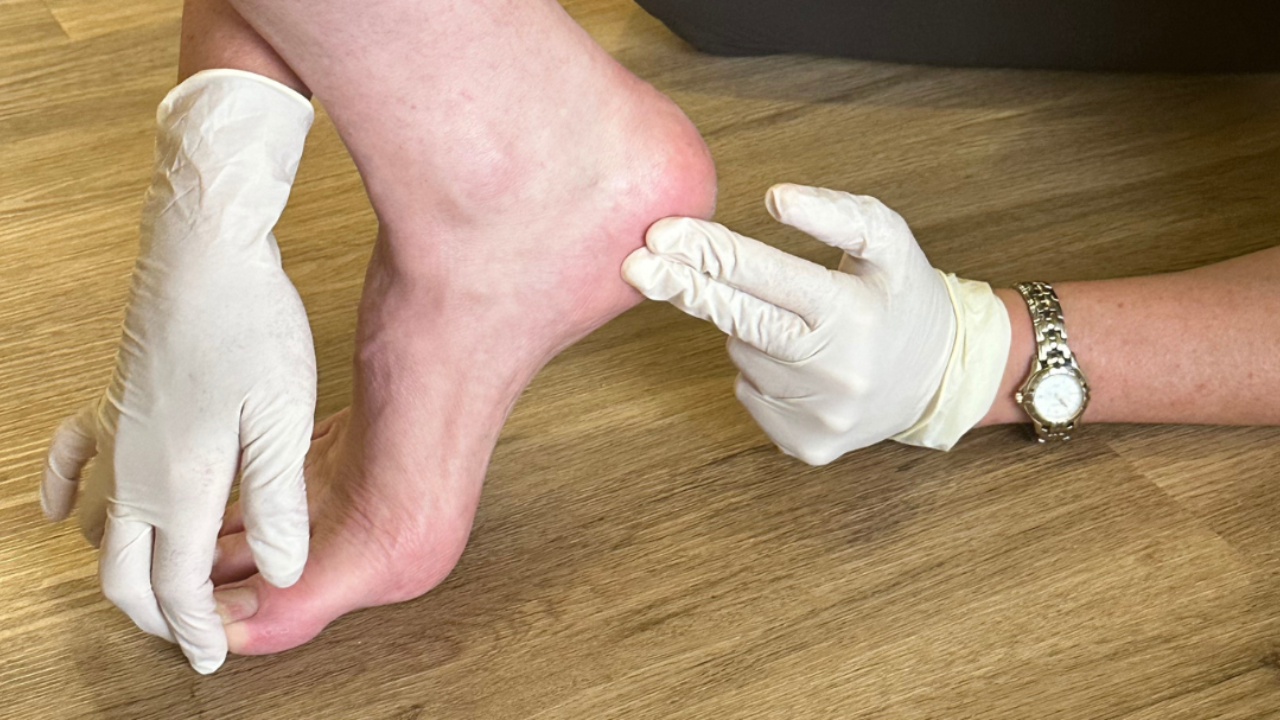
The foot plays a critical role in stabilising the body during standing and movement. It is the controller of movement .
It provides sensory feedback to the nervous system and acts as the foundation for the entire kinetic chain.
If the foot cannot adapt to the ground or stabilise effectively, this can influence movement further up the body.
Poor foot control may contribute to issues at the:
-
ankle
-
knee
-
hip
-
lower back
This is why assessing movement , not just isolated strength is so important.
Simply inserting an orthotic or prescribing strengthening exercises without understanding how someone moves may not solve the underlying issue.
Control Before Strength
One of the key principles I teach my clients and in my courses is “control before strength.”
Before increasing load, we must first ensure that the body can control movement effectively.
This includes:
-
joint alignment
-
muscle coordination
-
movement timing
-
stability during dynamic tasks
Once these elements are established, strength training becomes far more effective.
Without this foundation, strengthening exercises may simply reinforce dysfunctional movement patterns.
What Rehabilitation Should Focus On
Effective rehabilitation should focus on restoring optimal movement strategies.
This may involve:
-
improving motor control
-
retraining muscle activation patterns
-
developing foot stability
-
enhancing balance and coordination
-
gradually reintroducing load
Strengthening still plays an important role , but it should occur within a coordinated movement pattern.
The goal is not just stronger muscles.
The goal is a better functioning movement system.
What This Means for You
If you have been dealing with persistent injuries, it may be worth asking an important question:
Are we only strengthening muscles, or are we improving how the body moves?
Addressing the underlying movement patterns can often be the missing piece in long-standing injuries.
About the Author
Tracy Cooke is an Injury & Rehabilitation Podiatrist with over 30 years of clinical experience treating complex foot, ankle and lower limb injuries.
Based in Perth, Western Australia, Tracy specialises in helping people overcome persistent pain, recurrent injuries and movement problems by addressing the underlying causes of dysfunction rather than simply treating symptoms.
Her clinical approach focuses on global movement assessment, Dynamic Neuromuscular Stabilisation (DNS), motor control and movement-based rehabilitation, recognising that the foot plays a critical role in stabilising the entire body.
Tracy works with athletes, active individuals and people struggling with long-standing foot and lower limb pain, including conditions such as Achilles injuries, plantar heel pain, recurrent ankle sprains and sports-related injuries.
She is also the founder of The Stabilisation Academy, where she teaches health professionals internationally about stabilisation, motor control and modern rehabilitation strategies.
Tracy consults privately at From The Feet Up Sports & Podiatry Clinic in Perth, helping patients restore efficient movement, reduce pain and prevent injuries from returning.
If you’re in Perth and struggling with ongoing foot, ankle or lower limb pain, you can book an appointment here:
Book an Appointment Here
Health professionals interested in learning more about stabilisation and movement-based rehabilitation can access Tracy’s free masterclass on Understanding and Applying Stabilisation Principles here:
Register for the [FREE] Masterclass Link here
References
Hodges, P.W. & Richardson, C.A. (1996) ‘Inefficient muscular stabilization of the lumbar spine associated with low back pain: A motor control evaluation of transversus abdominis’, Spine, 21(22), pp. 2640–2650.
Van Dieën, J.H., Selen, L.P.J. & Cholewicki, J. (2003) ‘Trunk muscle activation in low-back pain patients, an analysis of the literature’, Journal of Electromyography and Kinesiology, 13(4), pp. 333–351.
Borghuis, J., Hof, A.L. & Lemmink, K. (2008) ‘The importance of sensory-motor control in providing core stability’, Sports Medicine, 38(11), pp. 893–916.
Latash, M.L. (2008) Neurophysiological Basis of Movement. Champaign: Human Kinetics.
Myer, G.D., Ford, K.R. & Hewett, T.E. (2008) ‘Rationale and clinical techniques for anterior cruciate ligament injury prevention among female athletes’, Journal of Athletic Training, 43(6), pp. 640–648.