Arch Support: Crutch or Cure? Do You (or Your Clients) Really Need It
Dec 12, 2025We see it all the time: someone is told they have “flat feet” and that they need arch support before they even take a few steps in the clinic. As movement-focused practitioners, we know it’s more nuanced than that. Flat feet are not a diagnosis, and arch supports are not automatically the solution.
In this article, we’ll unpack why static posture doesn’t equal poor function, the difference between a low arch and a truly dysfunctional foot, when orthotics can help (and when they might hold people back), how to assess arch function instead of just shape, and how to talk about this in a way that reduces fear rather than amplifying it. The goal is to help both health professionals and the general public make smarter decisions about feet, footwear, and support.
Posture vs Function: Why a “Flat” Foot Isn’t Automatically Bad
One of the biggest myths in foot care is that the way a foot looks in standing tells you everything you need to know. It doesn’t. Static posture is just one snapshot.
Studies comparing static foot posture (such as the Foot Posture Index) with dynamic measures like plantar pressure and gait patterns have found that the correlation is weak at best: a foot that looks pronated or flat when standing does not necessarily behave abnormally when walking or running. Static measures simply have limited ability to predict how the foot will function under load.
On top of that, large prospective studies in runners show that moderate pronation is not associated with a higher risk of injury when people wear neutral shoes. In a one-year study of over 900 novice runners, those with pronated feet did not experience more injuries than those with “neutral” arches . That directly challenges the old idea that pronation or flat feet are inherently dangerous.
So a key reframe is this: a low arch does not automatically mean a weak, unstable, or injury-prone foot. It’s variation in structure, not a diagnosis.
Low Arch vs Dysfunctional Foot
A low arch on its own is usually just an anatomical variant. Many people have lower arches from childhood, move well, and never develop symptoms. In children, flexible flat feet are considered a normal variant: the arch disappears in standing but reappears when they sit or rise onto tiptoes, and most need no treatment at all . Adults can be the same - structurally “flat” but functionally fine.
A dysfunctional foot, by contrast, is one that is failing its job: often painful, progressively deforming, stiff, or unable to stabilise under load. Examples include:
-
Posterior tibial tendon dysfunction (adult-acquired flatfoot), where a key tendon that supports the arch is failing.
-
Rigid flatfoot, where the arch remains flattened even when non-weight-bearing or on tiptoe, suggesting structural restriction rather than just a flexible shape.
In these situations, the flat posture is a symptom of underlying pathology, not the cause in itself.
Clinically, a quick screen is:
-
Does an arch appear (and the heel invert slightly) when the person does a single-leg heel raise or stands on tiptoe?
-
Does the arch look different seated vs standing?
- Functionally upon heel lift, Does the arch remain , and not pronate.
If yes, you are likely dealing with a flexible, adaptable foot that can generate an arch when needed – even if it looks flat in quiet standing. That’s very different to a rigid, painful flatfoot that may require medical intervention.
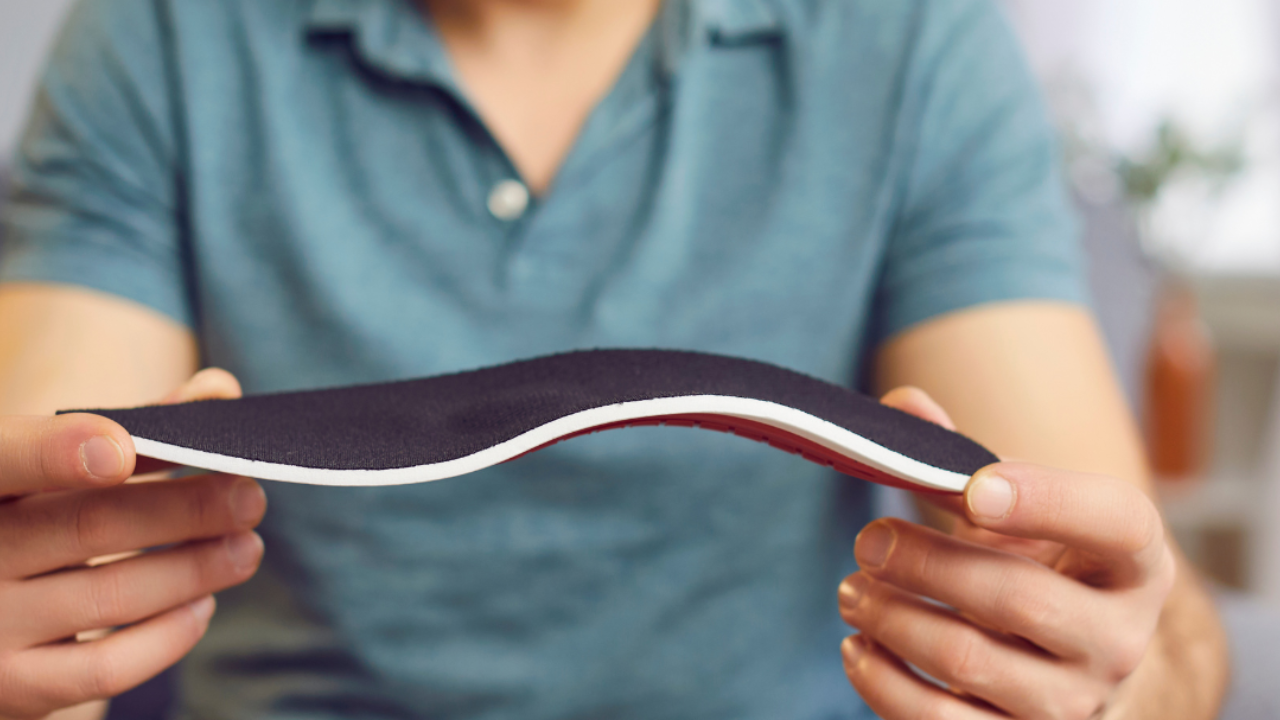
Orthotics: Facilitator or Forever Crutch?
Next controversy: orthotics and arch supports. Are they essential for flat feet, or are we over-prescribing them?
When Orthotics Can Help
There is no question that orthoses have a role. They can:
-
Reduce stress on painful tissues in conditions like plantar fasciitis or tendinopathy.
-
Offload failing structures in conditions like posterior tibial tendon dysfunction.
-
Improve comfort and function in people with significant deformity or bony restriction.
-
Provide a short-term “brace” while someone completes a rehab plan.
Randomised trials in plantar fasciitis show that both custom and prefabricated orthoses can produce small short-term improvements in pain and function. That can be enough to keep some people moving while you address load management, strength, and gait.
In kids with symptomatic flexible flatfoot (painful, not just flat), research suggests that rearfoot-controlling orthoses can reduce pain and alter muscle activity around the ankle in a helpful way. The key word there is symptomatic – sore, struggling feet, not every flexible flat foot on the playground.
When Orthotics Might Hinder Progress
Problems arise when orthoses are used as a default for anyone with a low arch, without assessing function or considering other options.
A 12-week intervention studying adults with flatfoot found that wearing custom orthoses significantly reduced the cross-sectional area of several intrinsic foot muscles by about 10–17%, with no increase in muscle activation. In other words, constant external support allowed the small stabilising (intrinsic) muscles of the foot to do less work and shrink. That doesn’t mean orthotics are “bad,” but it does highlight the risk of turning a temporary tool into a long-term crutch.
The plantar fasciitis trial mentioned above also found that, over 12 months, custom and prefabricated orthoses were no more effective than a sham insert for long-term pain relief, and any benefits in function were small and short-lived. That’s a strong reminder that orthoses manage symptoms; they don’t magically “fix” the foot.
So a more nuanced stance is:
-
Use orthoses or insoles strategically to facilitate movement, reduce pain, and buy time.
-
Pair them with a plan to restore mobility, strength, and control.
-
Reassess regularly rather than assuming “orthotics for life” on the basis of arch shape alone.
Orthotics should help a foot move better, not replace its job forever.
How to Assess Arch Function (Not Just Shape)
If static arch height is only part of the story, what should we actually look at?
For both health pros and curious clients, think in terms of function tests rather than just posture checks:
-
Tiptoe / single-leg heel raise
-
Ask the person to stand on one leg and slowly rise onto their toes.
-
Watch for heel inversion and arch formation.
-
If the arch and heel don’t move at all, or the person can’t perform the task, consider possible tendon or strength issues.
-
-
Flexible vs rigid flatfoot
-
Compare the arch in sitting, relaxed standing, and tiptoe.
-
If the arch appears when sitting or on tiptoe but flattens in standing, it’s a flexible flatfoot – usually benign unless painful.
-
If the arch never appears and the foot stays flat and stiff, that’s more concerning and may need imaging or specialist review.
-
-
Gait and squat
-
Watch how the foot behaves during walking, running, or a simple bodyweight squat.
-
Some pronation on loading is normal; persistent collapse without resupination at push-off is more relevant than how “flat” the foot looks at rest.
-
-
Balance and proprioception
-
Simple single-leg balance can reveal a lot about how well the foot and ankle control the body above them.
-
Look for toes gripping, excessive wobbling, or difficulty holding position.
-
-
Intrinsic foot strength
-
If the toes are clawed or they have hammer toes and /or a bunion - then this is a great indication that the foot intrinsic muscles are not functioning as they should.
-
Capacity should improve with practice of specific functional foot intrinsic excercises, showing that the “foot core”as some call it, can be trained.
-
This kind of assessment shifts the conversation from “Your arches are flat” to “Here’s what your feet can and can’t do right now – and here’s how we can change that.”
Changing the Conversation: From Fear to Function
Language matters. Clients often arrive with heavy labels: “collapsed arches”, “bad feet”, “overpronator”, “I’ve been told I’ll wreck my knees if I don’t wear support.” As practitioners, we can either reinforce that fear or help reframe it.
A few practical shifts:
-
Normalise variation. Explain that arch height sits on a spectrum, and many people with flat feet live and move without pain. Use phrases like, “Your feet are on the flatter side, which is common,” instead of “Your arches have collapsed.”
-
Separate structure from capacity. “Your arch is lower, but the good news is your foot is flexible and responds well when you load it. We’re going to build on that.”
-
Describe orthoses as tools, not permanent body parts. “We’ll use this insert as a support while things calm down, but at the same time we’ll train your foot muscles so you’re not relying on it forever.”
-
Highlight progress. Track changes in balance time, walking tolerance, calf raises, or pain levels. Show people their feet can adapt and get stronger.
For the general public, the key message is: flat feet are not a life sentence. For health professionals, the message is: stop equating static arch shape with dysfunction, and use your assessments and tools to build function, not fear.
So… Do You Really Need Arch Support?
Here’s the controversial answer: not nearly as often as you’re told.
If you or your client has a painful, stiff, or progressively deforming flatfoot, orthoses and other supports can be incredibly valuable - especially as part of a broader plan that includes load management, strength, and footwear changes.
If you simply have low arches but no pain and good function, routine arch supports “just in case” are not supported by the evidence and may even decondition the very muscles that should be supporting you.
Instead of asking, “How high is my arch?” it’s far more useful to ask, “Can my foot do what I need it to do?” If not, the answer is rarely only in the shoe. It’s in training, education, and understanding how function underpins form.
Want to Go Deeper into Foot Function?
If this conversation has sparked some questions – or a few healthy disagreements – that’s a good thing. This is exactly the kind of nuance we explore in my one-day course:
Foundations of Function: Facilitating Ideal Foot and Ankle Movement
📍 Perth
📅 7 February 2026
Across the day we’ll cover:
-
Practical assessment of active foot and ankle function (beyond static posture)
-
How to integrate strength, neuromuscular control, and timing into exercise prescription
-
Clear, client-friendly language you can use immediately in clinic or coaching
Whether you’re a health or movement professional, or a curious mover who wants to understand your own feet, you’ll walk away with a clearer framework for deciding when support helps - and when function is the real prescription.
Early Bird Special before Jan 2nd 2026 : https://www.thestabilisationacademy.com/sp-fof-in-person-1
References
-
Origo, D. et al. (2024) ‘Foot Posture Index Does Not Correlate with Dynamic Foot Assessment Performed via Baropodometric Examination: A Cross-Sectional Study’, Healthcare, 12(8), p. 814. EBSCO OpenURL
-
Paterson, K.L. et al. (2015) ‘Predicting Dynamic Foot Function From Static Foot Posture’, Journal of Orthopaedic & Sports Physical Therapy, 45(10), pp. 799–805. JOSPT
-
Nielsen, R.O. et al. (2014) ‘Foot pronation is not associated with increased injury risk in novice runners wearing a neutral shoe: a 1-year prospective cohort study’, British Journal of Sports Medicine, 48(6), pp. 440–447. British Journal of Sports Medicine+1
-
OrthoInfo – American Academy of Orthopaedic Surgeons (2022) ‘Flexible Flatfoot in Children’. OrthoInfo
-
Royal Children’s Hospital Melbourne (2023) ‘Flat feet – Orthopaedics guideline for health professionals’. Royal Children's Hospital
-
Nattrass, G. (2023) ‘Flat Feet in Children’, Gary Nattrass Orthopaedics (patient information). Gary Nattrass
-
Physio-pedia (2024) ‘Tip Toe Standing Test’. Physiopedia
-
Sydney Orthopaedic Specialists (2023) ‘Flatfoot Deformity’. Sydney Orthopaedic Specialists
-
Protopapas, K. and Perry, S.D. (2020) ‘The effect of a 12-week custom foot orthotic intervention on muscle size and muscle activity of the intrinsic foot muscles of young adults during gait termination’, Clinical Biomechanics, 78, 105063. PubMed+2ScienceDirect+2
-
Landorf, K.B., Keenan, A.M. and Herbert, R.D. (2006) ‘Effectiveness of foot orthoses to treat plantar fasciitis: a randomized trial’, Archives of Internal Medicine, 166(12), pp. 1305–1310. Kintec+2JAMA Network+2
-
Cho, D.J. et al. (2021) ‘Effect of Foot Orthoses in Children With Symptomatic Flexible Flatfoot’, Annals of Rehabilitation Medicine, 45(6), pp. 440–450. E-ARM