
THE MOVEMENT REASONING FRAMEWORK™
A clearer way to think about movement.
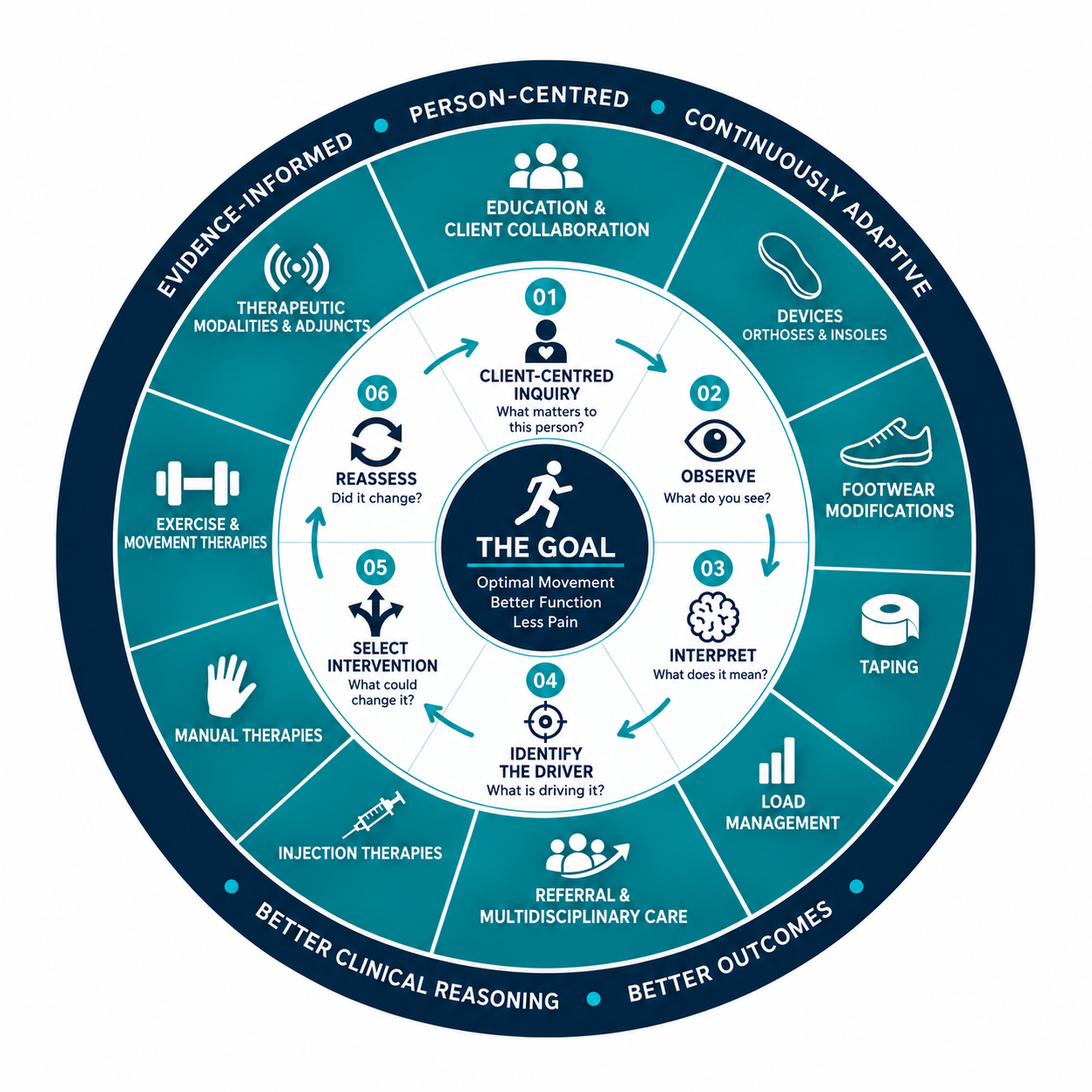
The Movement Reasoning Framework™ provides a clear, repeatable process for understanding the person, exploring movement, making sense of what you find and making interventions decisions with greater purpose.
Rather than starting with a diagnosis or treatment, the framework starts with the person, and uses clinical reasoning to guide what happens next.
Six stages. One continuous reasoning process.
01 Client-Centred Inquiry
02 Observe
03 Interpret
04 Identify the Driver
05 Select Intervention
06 Reassess
THE THINKING COMES FIRST
Start with the person.
Reason through the movement.
Then choose the intervention.
The same presentation does not necessarily require the same intervention.
By placing reasoning before treatment selection, the framework encourages clinicians to consider the individual, their movement and their goals before deciding what may be appropriate.
The tool doesn't drive the reasoning.
The reasoning guides the tool.
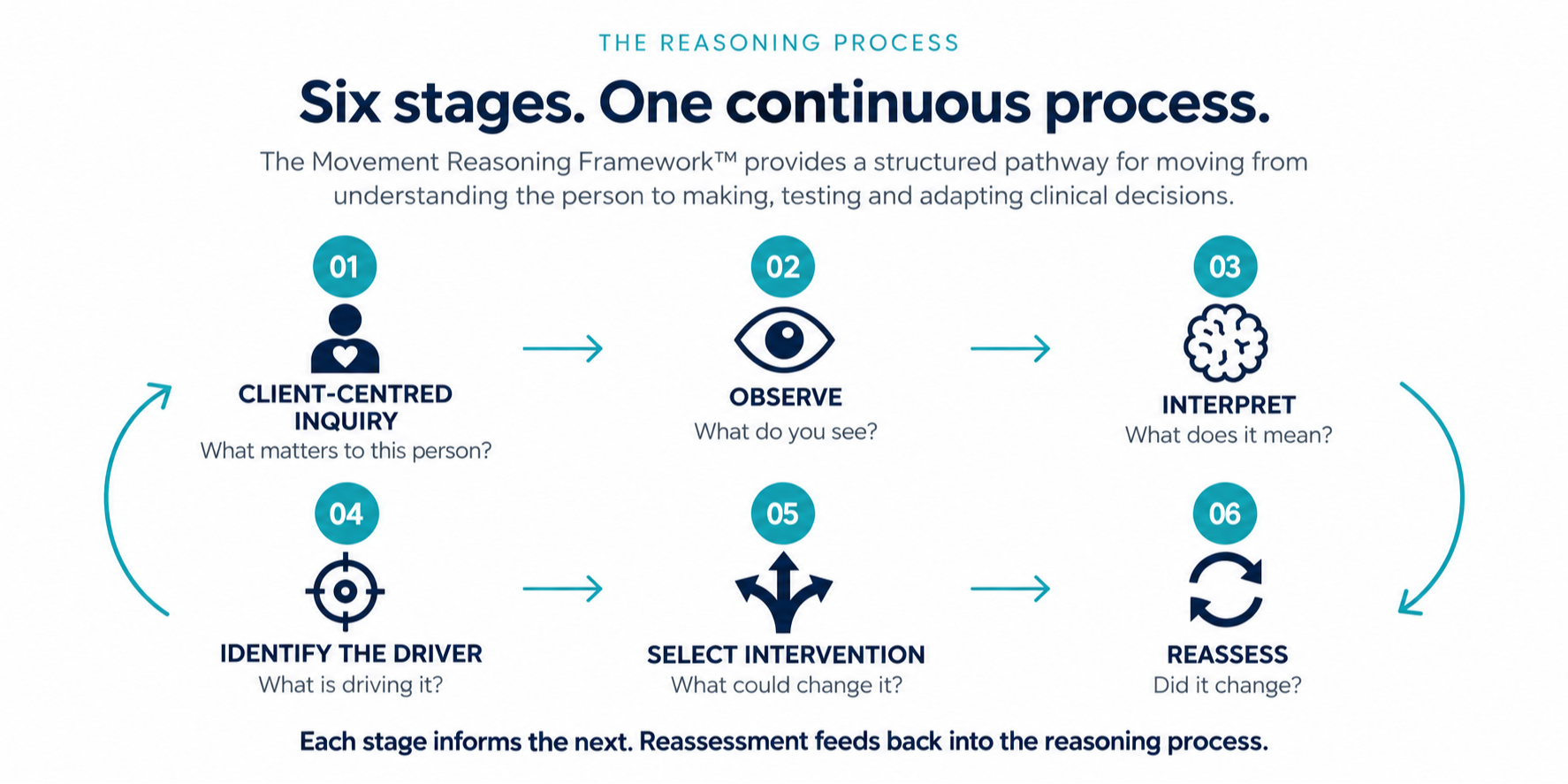
01 INQUIRY → 02 OBSERVE → 03 INTERPRET → 04 DRIVER → 05 INTERVENTION → 06 REASSESS
01
CLIENT-CENTRED INQUIRY
What matters to this person?
Good clinical reasoning begins with understanding the person in front of us.
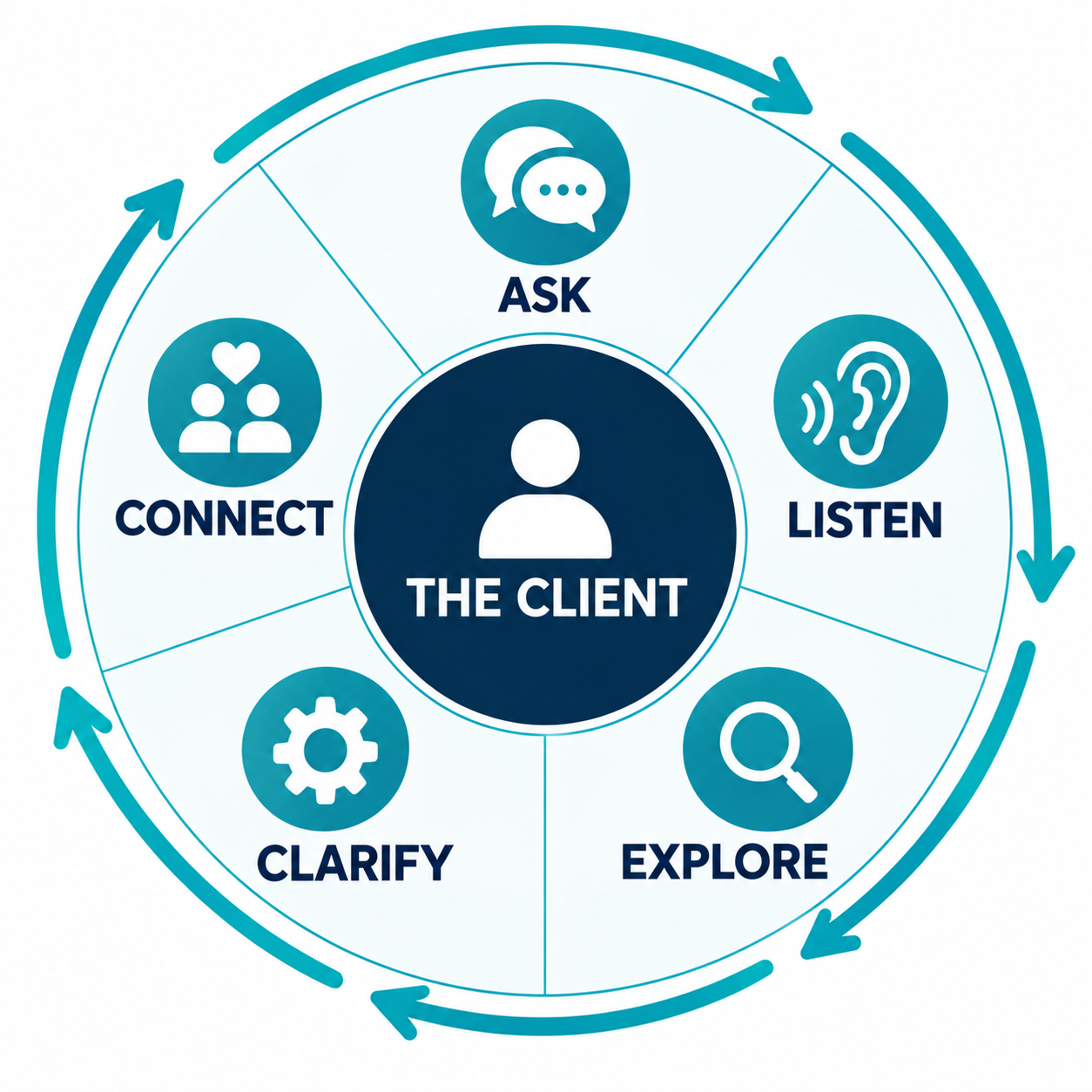
Client-centred inquiry is more than collecting a history. It is about asking meaningful questions, listening carefully and allowing the client's experience, goals and context to inform the reasoning process.
ASK THE RIGHT QUESTIONS.
What the client tells us can change what we observe, how we interpret it and what we choose to do next.
Once we've listened, we need to look.
01 INQUIRY → 02 OBSERVE → 03 INTERPRET → 04 DRIVER → 05 INTERVENTION → 06 REASSESS
02
OBSERVE
What do you see?
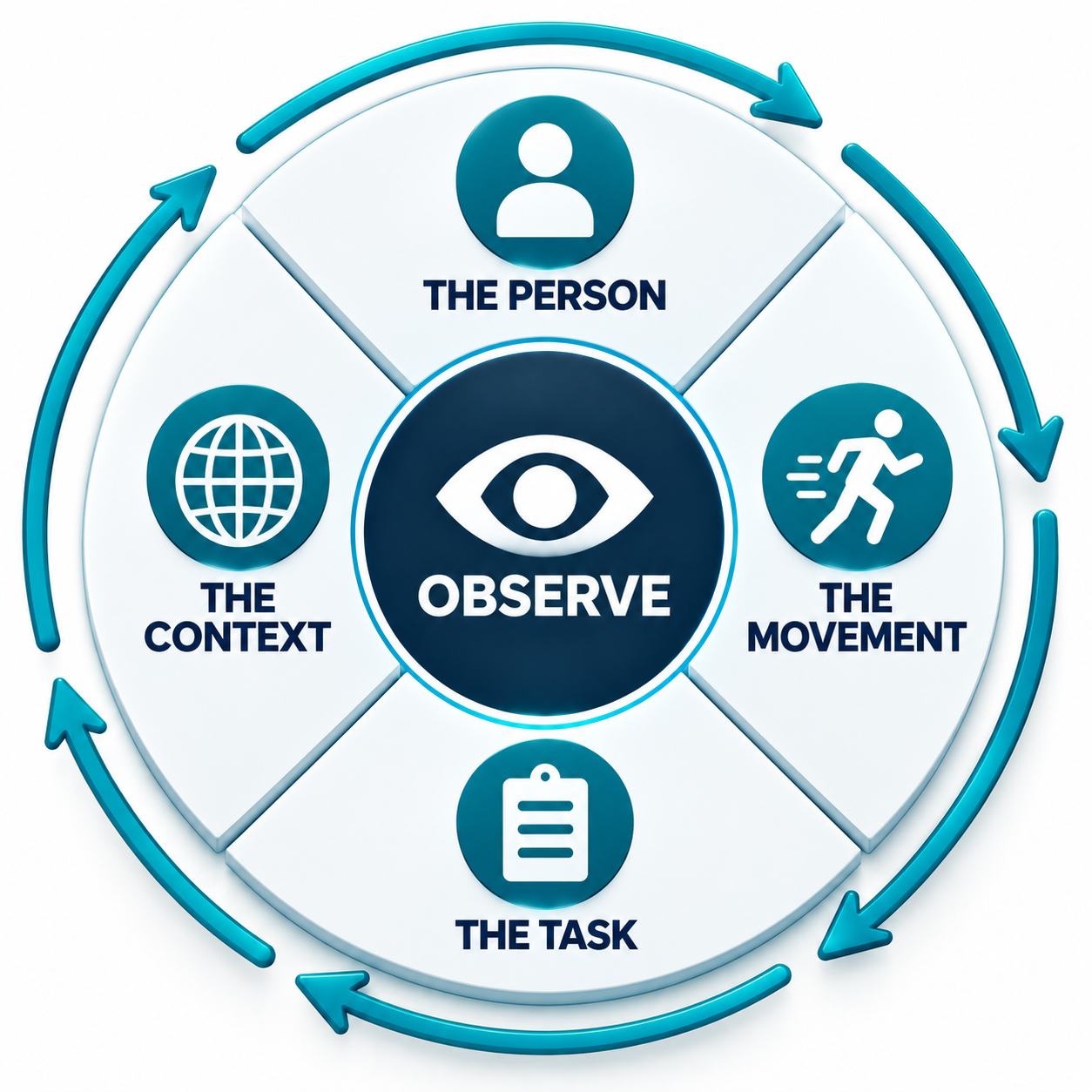
Before deciding why a movement is happening, take time to observe what is happening.
Look at the person, the movement, the task and the context. Notice what changes and under what conditions, without deciding on the cause too soon.
OBSERVE BEFORE YOU EXPLAIN.
Start with what is happening before deciding why.
Interpret what you observed
01 INQUIRY → 02 OBSERVE → 03 INTERPRET → 04 DRIVER → 05 INTERVENTION → 06 REASSESS
03
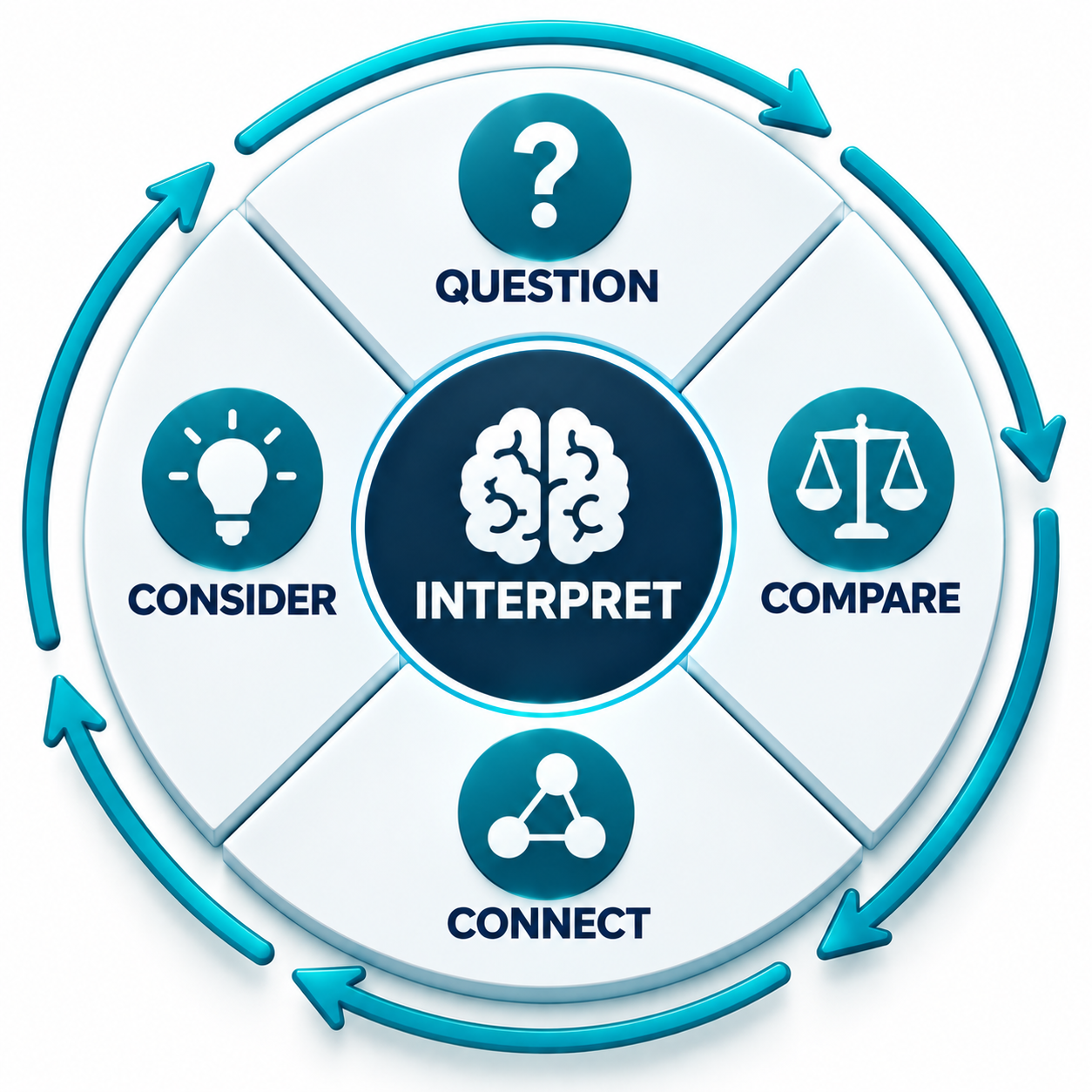
INTERPRET
What does it mean?
Observation tells us what is happening. Interpretation asks what a finding may mean for this person.
Consider the finding in relation to the person, their movement and the task. Compare where useful, connect related observations, and consider more than one possible explanation.
A FINDING IS A CLUE, NOT A CONCLUSION..
Not every finding needs to be changed. Understanding what it may mean helps you decide what to explore next.
What might be driving it?
01 INQUIRY → 02 OBSERVE → 03 INTERPRET → 04 DRIVER → 05 INTERVENTION → 06 REASSESS
04
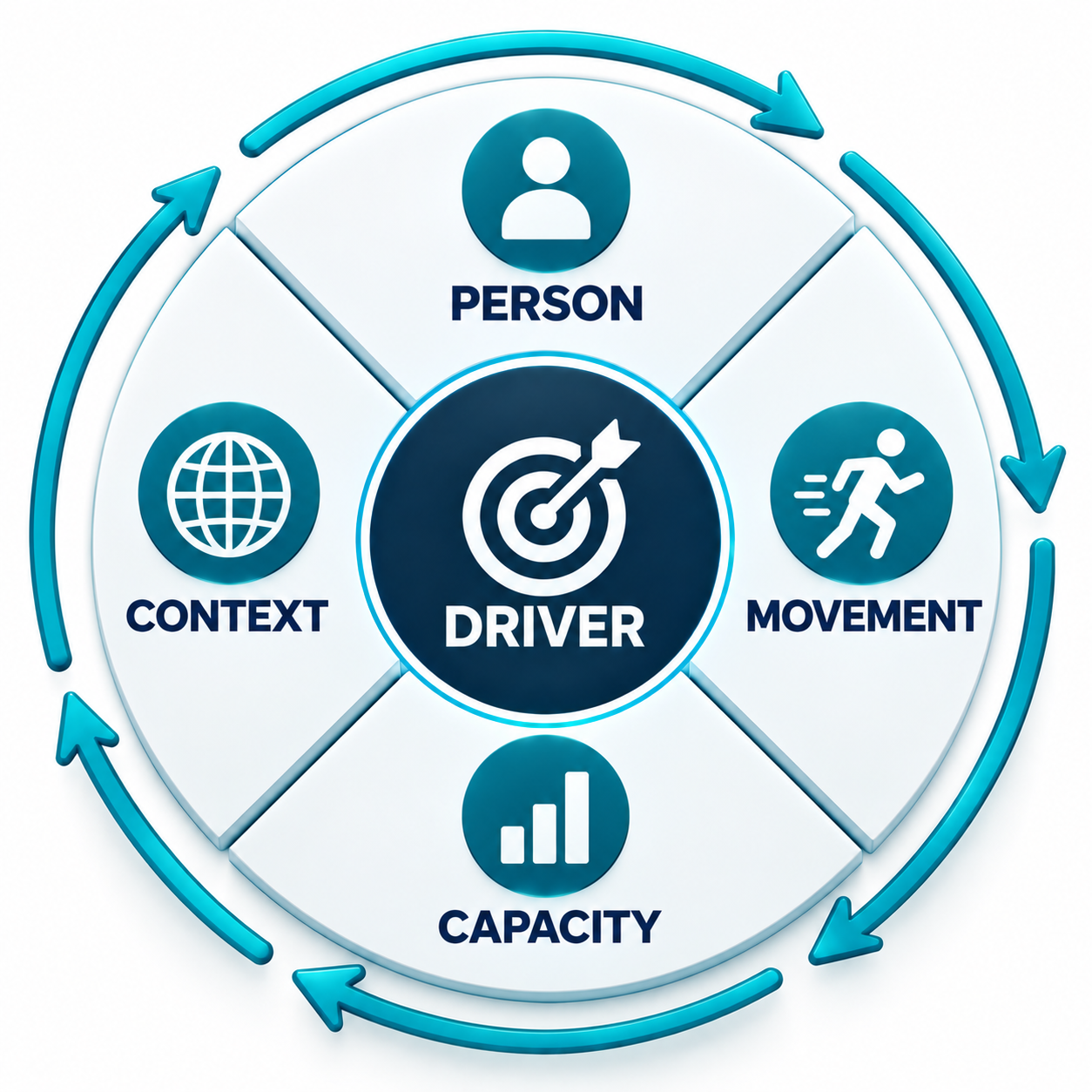
IDENTIFY THE DRIVER
What may be driving it?
The most obvious finding is not always the factor most relevant to the person’s symptoms or functional goal.
Use what you learned from the person, their movement, capacity and context to consider what may be contributing.
Treat this as a working hypothesis to explore, not a proven cause.
THE FINDING ISN'T NECESSARILY THE DRIVER..
A working hypothesis gives your intervention a clearer purpose.
What could change it?
01 INQUIRY → 02 OBSERVE → 03 INTERPRET → 04 DRIVER → 05 INTERVENTION → 06 REASSESS
05
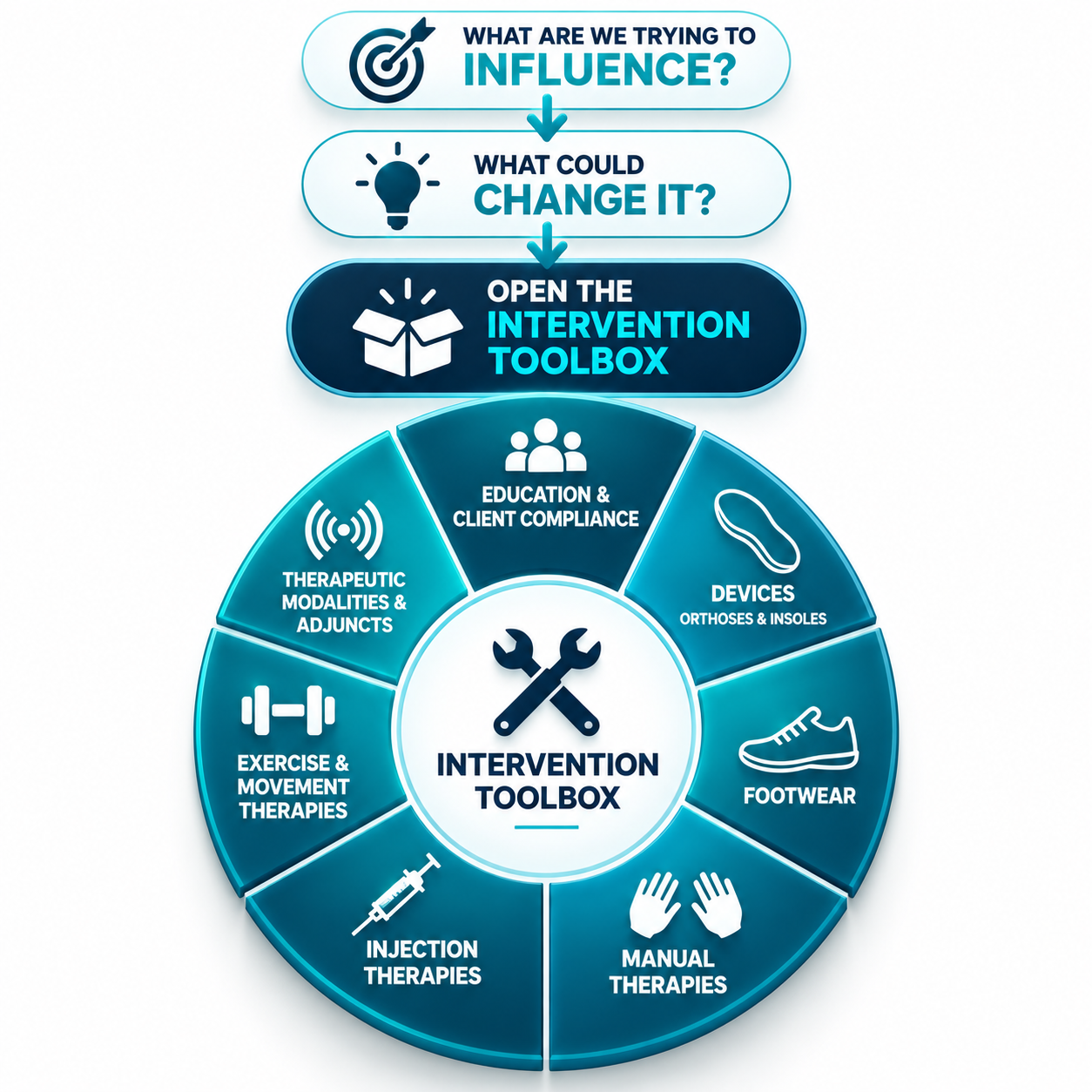
SELECT INTERVENTION
What could change it?
Intervention selection follows clinical reasoning.
Choose an intervention, or a combination that fits the person and the factor you hope to influence.
LET YOUR REASONING GUIDE YOUR CHOICE !
Similar presentations can call for different interventions because each person’s goals, capacity and context are different.
ONE DRIVER.
DIFFERENT WAYS TO INFLUENCE IT.
One intervention may influence several aspects of movement.
Different interventions may influence the same driver.
WHY AM I CHOOSING THIS INTERVENTION ?
DID I HAVE THE EFFECT I INTENDED?
01 INQUIRY → 02 OBSERVE → 03 INTERPRET → 04 DRIVER → 05 INTERVENTION → 06 REASSESS
06
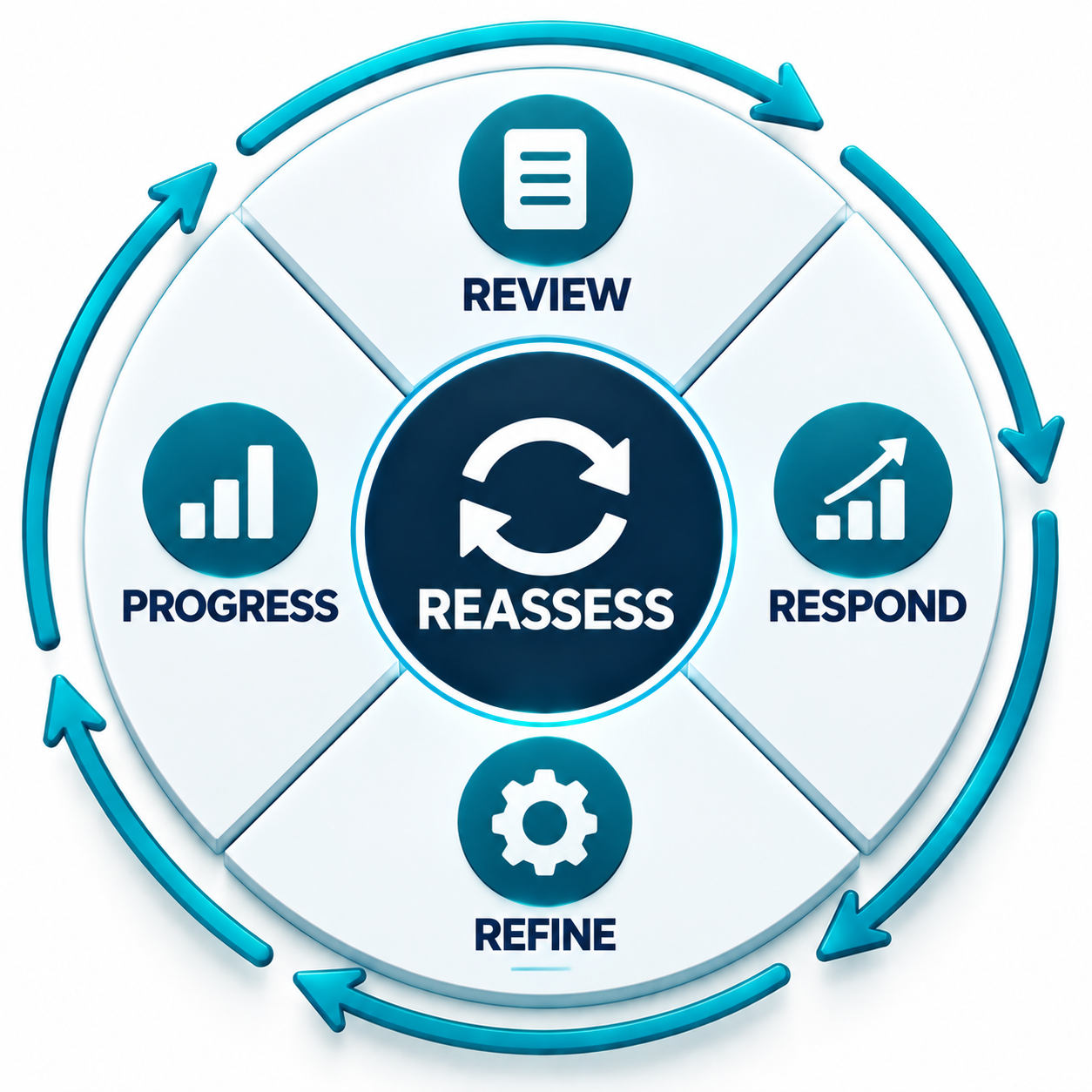
REASSESS
Did it change?
Compare the response with the goal you agreed on. Ask the client what has changed in their symptoms, movement or function, and consider what you observe as well.
REASSESSMENT KEEPS THE REASONING CYCLE MOVING.
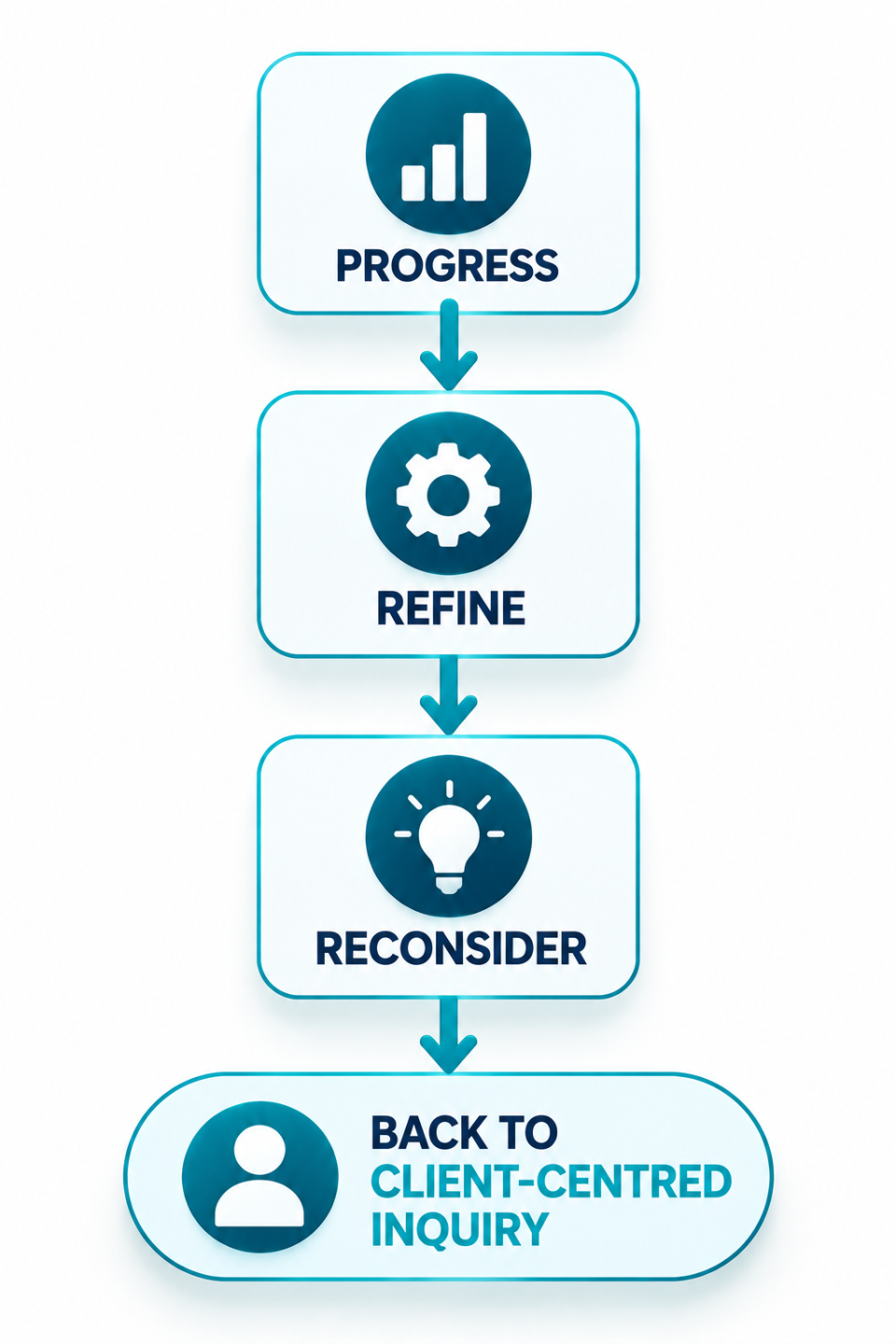
Use the response to choose your next step:
Progress
Builds on gains when the response supports the agreed goal
↓
Refine
Adjust the approach when the response is partial.
↓
Reconsider
Revisit your reasoning when the response is unexpected or the goal has not been met.
↓
RETURN TO CLIENT-CENTRED INQUIRY
Ask, Listen, and find out what has changed for the client.
e every client must go through.
Reassessment is one part of a connected process. Here’s how all six stages work together.
THE MOVEMENT REASONING FRAMEWORK™
Six stages - One connected reasoning process
01 INQUIRY → 02 OBSERVE → 03 INTERPRET → 04 DRIVER → 05 INTERVENTION → 06 REASSESS
Ready to put the framework into practice?
Explore the learning options designed to help you build confidence in movement assessment, clinical reasoning and intervention planning.
Understanding the framework is the beginning
Learning how to apply it changes the conversation
Professional education through The Stabilisation Academy takes clinicians beyond the framework itself and into its practical application.
Explore how to gather meaningful information, analyse movement, develop clinical hypotheses, select interventions with purpose and reassess their effect.
Choose how you’d like to learn
Practical education to build confidence in movement assessment and clinical reasoning.

ONLINE PROFESSIONAL EDUCATION
Learn at your own pace through structured professional education designed to develop movement and clinical reasoning.

FACE-TO-FACE EDUCATION
Take part in practical workshops and professional development focused on movement assessment, foot and ankle function, and rehabilitation reasoning.

UNIVERSITIES & ORGANISATIONS
Bring practical movement and clinical movement reasoning education to your students, clinicians or professional team.

FOR INDIVIDUALS
Looking for support with your own movement?
Explore practical online courses created for individuals, or book a one-to-one appointment with From The Feet Up Sports & Podiatry Clinic.
" MOVEMENT ISN'T RANDOM. IT'S A STRATEGY . UNDERSTAND IT. RESPECT IT. IMPROVE IT. "
TRACY-ANN COOKE | CLINICIAN | EDUCATOR